Nyamagabe District in Rwanda’s Southern Province is positioning itself as one of the areas advancing the country’s commitments under the Universal Periodic Review (UPR), particularly in food security, rural livelihoods and economic inclusion, through agriculture-led development.
At the center of this effort is the Food Basket Sites (FOBASI) program, a government initiative designed to modernize agriculture, increase productivity and connect farmers to markets. The program falls under the Fifth Strategic Plan for Agricultural Transformation (PSTA5), which guides Rwanda’s agricultural sector reforms.
Agriculture remains a key driver of Rwanda’s economy, with about 64% to 70% of the population depending on farming and livestock for income. The sector contributes roughly 25% to 29% of gross domestic product (GDP). Government investment continues across irrigation, improved seeds, fertilizer subsidies, mechanization, livestock development and post-harvest infrastructure. Under PSTA5, more than Frw 6,400 billion will be needed to fully transform the sector by 2028/29.

UPR commitments shaping agricultural policy
Rwanda received recommendations during its UPR review at the United Nations Human Rights Council focusing on strengthening food security, reducing rural poverty, improving access to agricultural inputs and protecting vulnerable communities from climate and economic shocks.
Development experts say the FOBASI approach aligns with many of these recommendations by encouraging organized production systems, improving productivity and strengthening market access for farmers.
In Nyamagabe, local officials say the district has embraced the program because of its potential to improve livelihoods and turn the area into a production hub serving Rwanda and parts of the East African region.
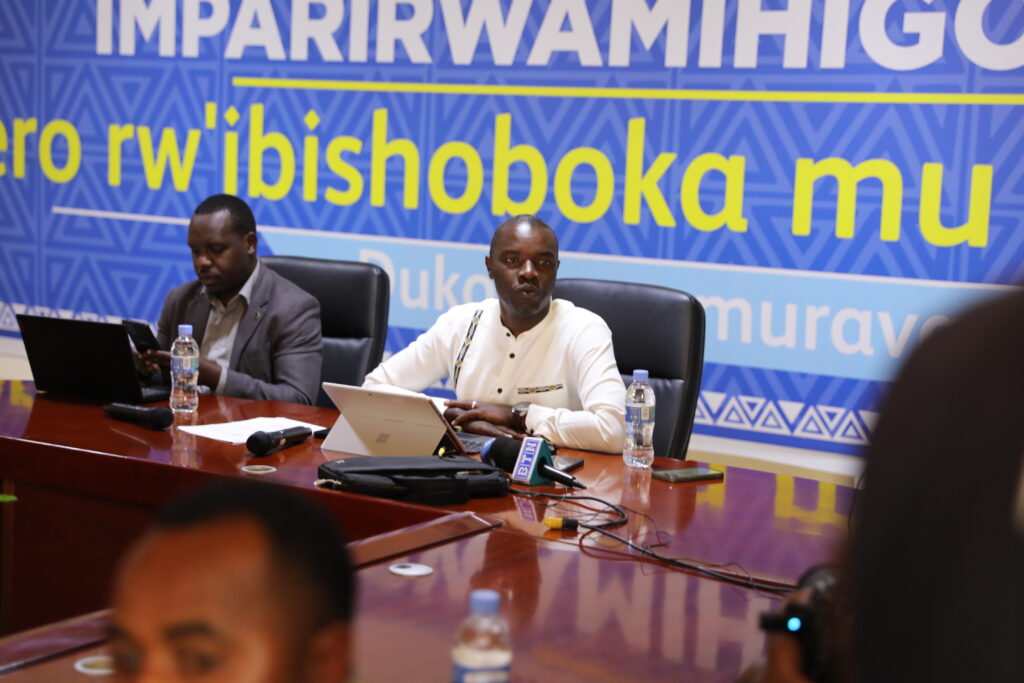
Nyamagabe Mayor Hildbrand Niyomwungeri said FOBASI is already influencing production and market access. “We are implementing FOBASI in order to boost food production, strengthen the incomes of our farmers and link Nyamagabe with markets in other districts and even in neighboring countries,” he said. “Agriculture must become the driver of transformation of our country.”
Shift toward modern farming systems
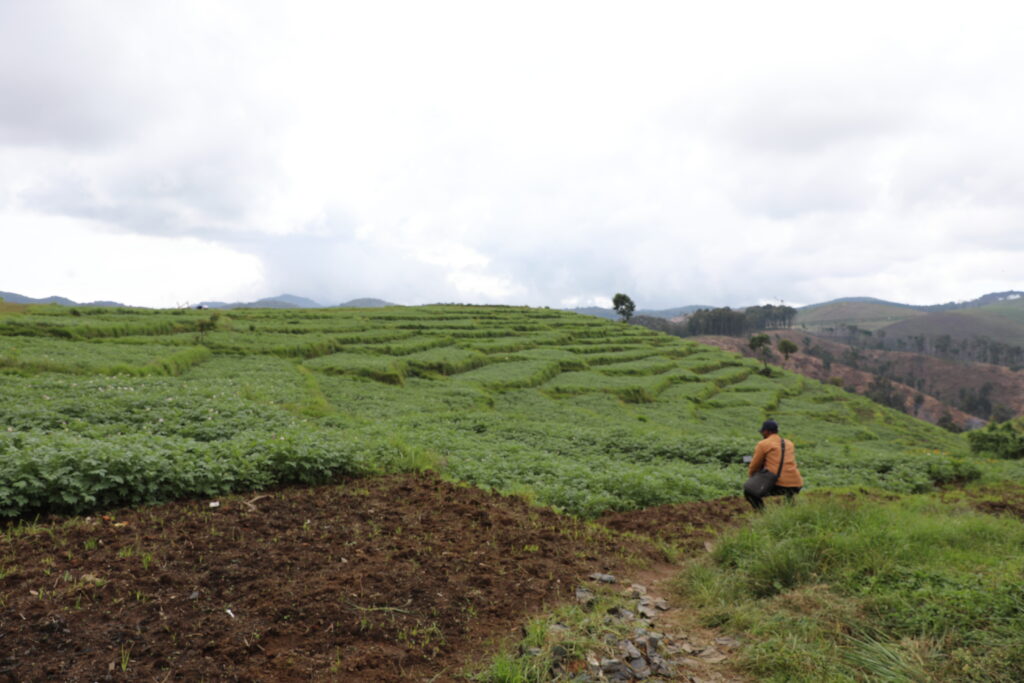
With fertile soils and a favorable climate, Nyamagabe has seen rising investment in greenhouses, irrigation systems, livestock production and other modern farming practices.
District officials say FOBASI reforms are helping consolidate land use, improve coordination with agronomists and expand access to inputs and extension services.
Farmers report gradual increases in productivity due to improved seeds, fertilizers and closer cooperation with cooperatives and agricultural experts.
Jean Nepo Rugema, a maize and beans farmer, said farming is increasingly becoming a business rather than subsistence activity. “Previously, most farmers used to produce food crops for domestic consumption,” he said. “Now there has been an increase in production and we are gradually accessing bigger markets.”
The district is also expanding road infrastructure to improve movement of agricultural goods from rural areas to urban centers and regional markets, according to local authorities.
Livestock market draws regional buyers
Nyamagabe’s livestock market has also grown into a regional trading point, attracting buyers from within Rwanda and neighboring countries, including the Democratic Republic of Congo and Burundi.
Veterinary experts say investments in modern livestock infrastructure and improved animal health services are raising the quality and competitiveness of livestock production in the country.
Nyiransanabera, who lives near the livestock market, said the facility has created new income opportunities for traders and livestock keepers. She said her son has benefited from livestock sales, enabling him to improve his living conditions.
Local authorities said modernization of livestock services and expanding regional trade are helping farmers treat livestock farming as a commercial activity capable of generating steady income.
Agriculture creating rural jobs
Beyond production, agriculture is increasingly becoming a source of employment in Nyamagabe, particularly for young people and women.
Greenhouse farming, irrigation projects, transport services and agro-processing activities are generating jobs along the agricultural value chain.
Patrice Hagenimana, who works in a greenhouse in Gatare Cell, Gatare Sector, said modern agricultural projects are helping reduce unemployment among young people.
“The work requires precision to produce improved seeds. You need discipline. It is a paid job that supports my family, but you also need to love what you do,” he said.
He added that youth migration to urban areas in search of work is slowly declining as more jobs are created locally through agricultural projects.
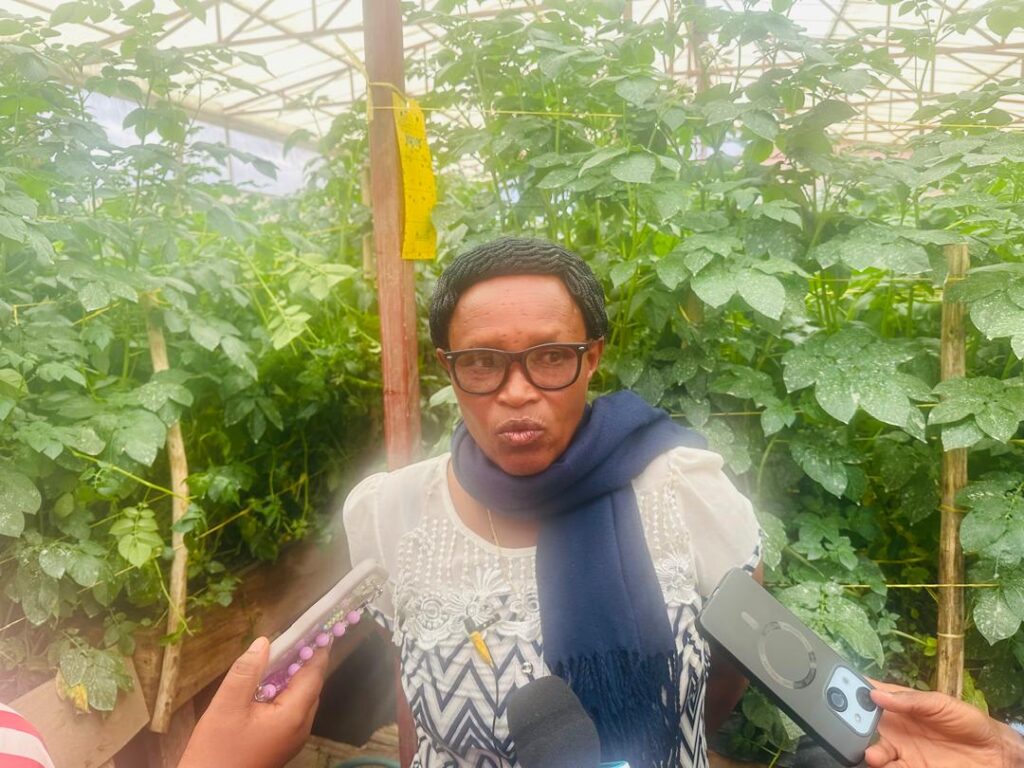
Investor Nizeyimana Antoinette said she has invested more than Frw 30 million in greenhouse potato production and reinvests about Frw 2 million each season. She manages about 13,000 seeds, each costing Frw 165, and said the returns help her pay workers and create employment.
Progress alongside structural challenges
Despite progress, Rwanda’s agricultural sector continues to face challenges including climate change, low mechanization, high input costs and post-harvest losses.
Still, districts like Nyamagabe are increasingly cited as examples of how national agricultural policies can be implemented locally to support development goals and broader human rights commitments.
As Rwanda works toward Vision 2050 and the National Strategy for Transformation (NST2), FOBASI is expected to remain one of the indicators of how agriculture contributes to inclusive economic growth.