PRISM Beneficiaries Across Western Province Innovate to Overcome Costly Animal Feed
Across Western Province, beneficiaries of the PRISM project are developing locally driven solutions to one of the biggest barriers to small livestock farming in Rwanda: the high cost and limited availability of animal feed. From farmer-made feed innovations in Nyamasheke and Ngororero to community-based feed trading initiatives in Nyabihu, beneficiaries say these approaches are helping them sustain livestock production, increase income, and move out of poverty.
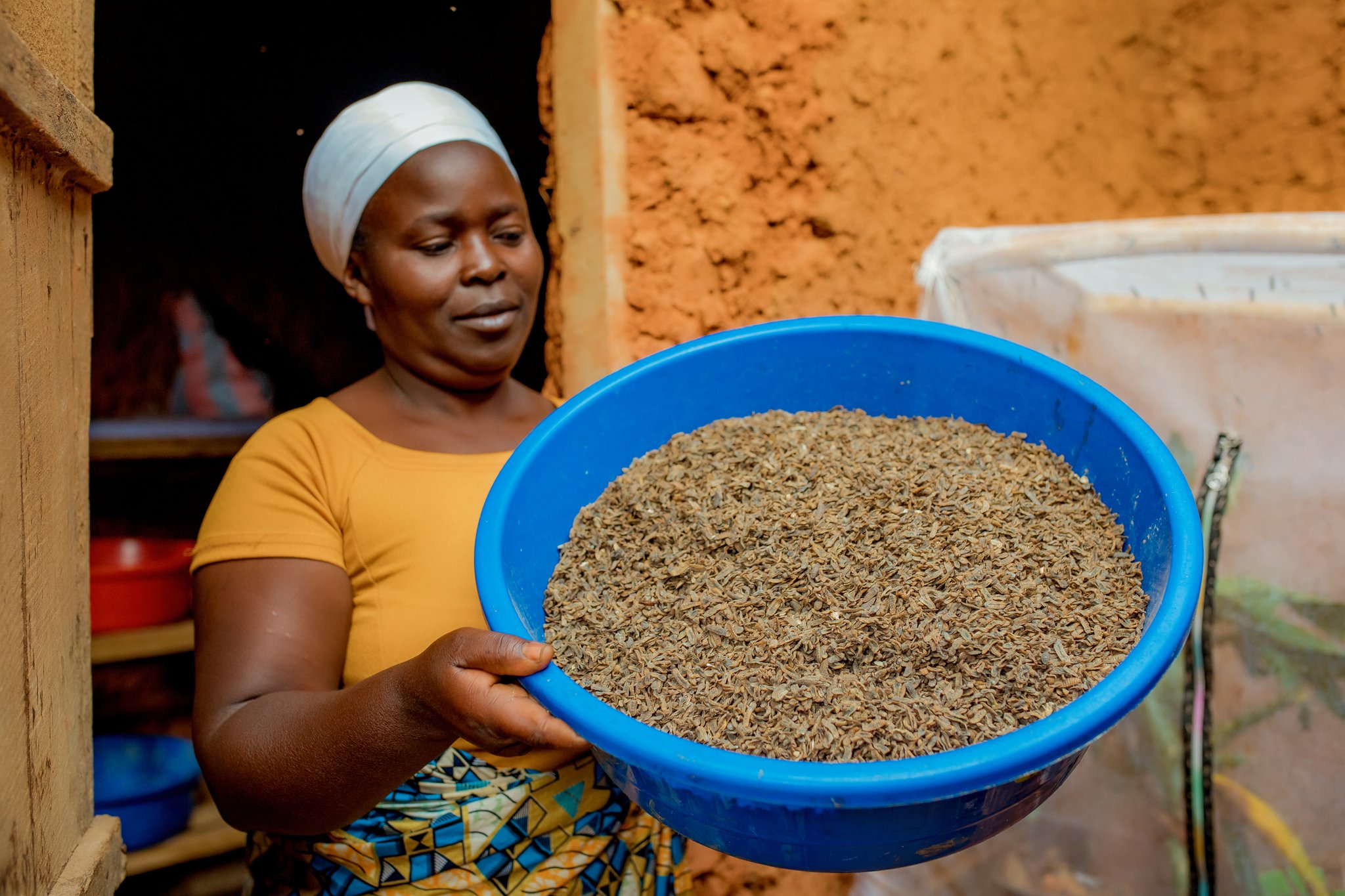
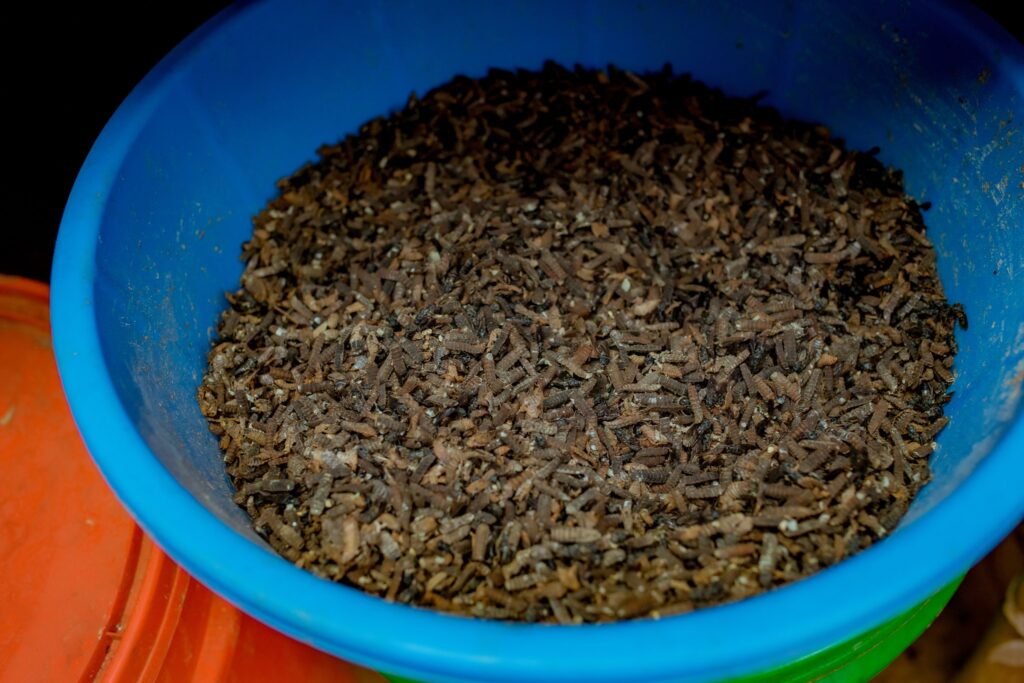
In Nyamasheke District, farmers supported by PRISM have turned to locally produced animal feed, including Azolla and black soldier fly larvae, after struggling with expensive commercial products. Nzayisenga Aimable, a pig farmer from Isesero Village in Kirimbi Sector, says access to feed was initially a major challenge, as farmers depended on distant markets where prices were high.
“We even started a small initiative where each member contributed one pig to raise capital for feed trading,” he said. “But when feed prices increased sharply, it became unsustainable.”
With training from PRISM, farmers learned to prepare affordable feed using locally available materials. “Previously, one sack of feed cost us 30,000 Rwandan francs,” Nzayisenga said. “Now, with the same amount, we can prepare two sacks of mixed feed that last longer.” The initiative currently benefits 61 members of the Wisigara Inyuma mu Iterambere group, who now prioritise feeding their own animals to ensure productivity.
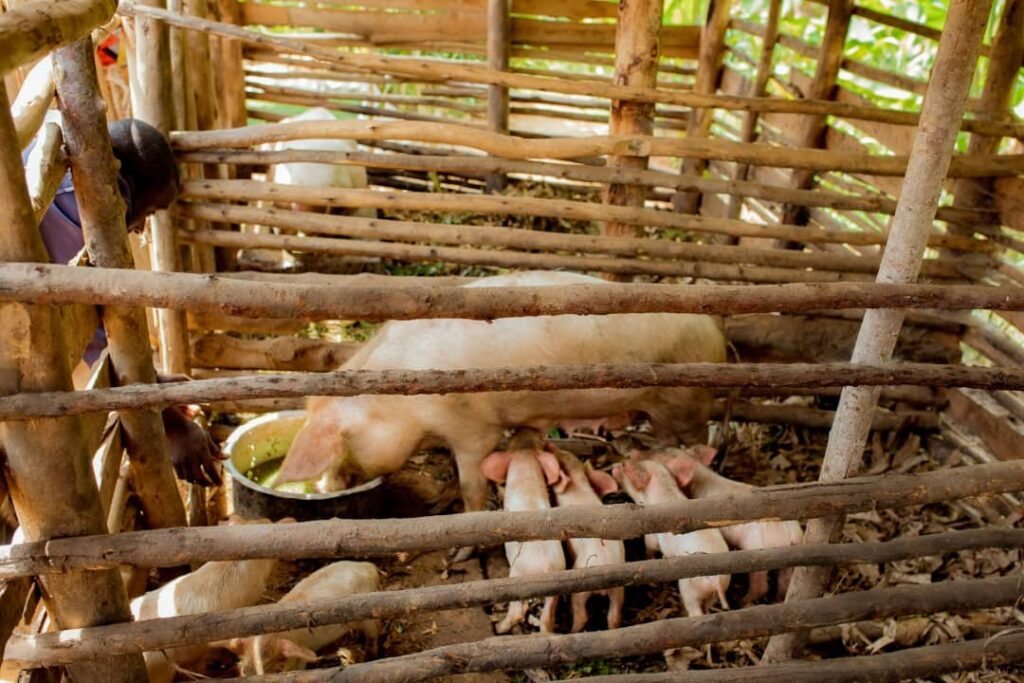
Another beneficiary, Nyiransengiyumva Charlotte, says the innovation has already transformed pig farming. “Within six months, a pig can now reach 150 kilograms or more, compared to less than 100 kilograms before,” she said, adding that she was close to quitting livestock farming due to feed costs.
Local authorities in Nyamasheke say PRISM has played a critical role in promoting inclusive livestock farming. Uwizeyimana Emmanuel, Executive Secretary of Kirimbi Sector, noted that the project filled a gap for households that could not benefit from other programmes such as Girinka, which require higher financial capacity.
“PRISM came as a real solution,” Uwizeyimana said. “The pigs and chickens, provided helped vulnerable households improve their livelihoods, pay school fees, contribute to community-based health insurance, and improve their housing conditions.”
He acknowledged that the high cost of animal feed remains a serious challenge across the district. “Some residents were afraid to engage in livestock farming because of the price of feed,” he said. “However, locally produced solutions such as black soldier fly larvae are helping to increase productivity. Although production is still limited, we strongly encourage these initiatives.”
In Nyabihu District, PRISM beneficiaries in Rambura Sector, organised under the Abihuje Group, have adopted a different approach by becoming local dealers of industrial animal feed. The group sources feed from Musanze District and resells it locally, addressing a long-standing gap where farmers previously had to travel to Musanze or Rubavu to access feed.
Hagenimana Louise, the group’s leader, said the idea emerged after livestock productivity increased. “After receiving animals from PRISM, egg production improved and pigs multiplied, but feed became a major challenge,” she said. “We realised we needed to sell animal feed ourselves because anyone who needed it had to go to Musanze or Rubavu.”
She added that combining egg sales with feed trading has helped expand the group’s business, though transport remains a major obstacle. “We buy only a few sacks at a time, but transporting them is difficult. Public taxis are not allowed to carry animal feed, and we cannot afford to hire a vehicle for such small quantities,” she said.
In Ngororero District, vulnerable households supported by PRISM have focused on self-production of animal feed to reduce dependence on expensive industrial products. Beneficiaries have adopted innovations such as Azolla cultivation and hydroponic fodder, enabling them to feed pigs, goats, and poultry at a lower cost.
Dusabirema Betty, a beneficiary from Nyange Sector, Bambiro Cell, and a member of the Duterimbere Bugabe 1 Group, said PRISM support helped her group transition from extreme poverty to asset ownership. “Before we received chickens, we were very poor,” she said. “The poultry helped us start saving, and later we bought pigs and shared them among members. Today, each of the 26 members owns a pig, and we also jointly manage three others.”
She said access to affordable feed was initially a major concern. “PRISM trained us to grow Azolla and prepare local feed,” she added. “This solution fits our financial capacity and has sustained our livestock.”
In Nyange Sector, Umuhire Fulgence, the Officer in Charge of Agriculture and Animal Resources, said animal feed used to be scarce or extremely expensive. “After farmers were organised into groups and trained to produce their own feed, the situation improved greatly,” he said.
He added that PRISM-supported livestock has helped households escape poverty faster. “You can now see iron sheets and construction materials entering this sector,” Umuhire said. “Many households say the money comes from selling pigs, especially since we have many buyers from the Democratic Republic of Congo.”
According to sector data, PRISM initially introduced 75 pigs into Nyange Sector, where the pig population stood at 2,418. A livestock census conducted at the end of last year shows the number has since risen to 4,800, growth local leaders partly attribute to PRISM’s intervention and improved feeding practices.
However, the high cost of animal feed remains a wider concern. During recent community outreach visits in the Western Province, senators received repeated complaints from both farmers and traders about expensive animal feed, identifying it as a major constraint to livestock production and rural enterprise growth.