
Karungi Doreen
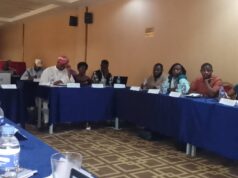
Journalists from various media outlets have been equipped with enhanced skills of how to collect and report stories based on scientific forensic evidence used in the justice system, during a training organized by the Rwanda Forensic Institute.
The training aimed at deepening the understanding of journalists in how forensic science works, the place of scientific evidence in the administration of justice, and how such sensitive stories can be reported professionally, accurately, and responsibly.
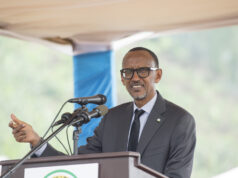
Speaking during the training, the Director of the Rwanda Forensic Institute, Lt Col (Ret.) Dr Charles Karangwa praised the Government of Rwanda for its strong dedication to the development of the institution through continuous investment in modern forensic equipment with advanced technologies.
“The Government of Rwanda continues to invest in state of the art forensic machinery. Every year, new equipment needs are assessed and acquired. All this is done without external funding; it is fully financed by the Government,” Dr Karangwa says.
He reminded the participants that the training was very important to the journalists, as forensic evidence in any justice system could let the innocent free or conclusively establish guilt
Dr Karangwa further stressed the importance of journalists clearly understanding the distinction between RIB, RFI, and other institutions, as well as knowing which information is authorized for publication and what must remain confidential.
He reminded participants that forensic reporting requires specialized knowledge and must strictly rely on official and validated laboratory reports.
“A forensic story is not an ordinary news story. A journalist must rely on verified information issued by a forensic laboratory and fully understand the limits of what can be reported,” he noted.
The RFI Director also highlighted that forensic services go beyond supporting justice, playing a significant role in crime prevention, as offenders are aware that scientific analysis can expose criminal acts.
“It deters people from committing crimes because they know forensic laboratories can uncover the truth. A clear example is the sharp decline in cases involving forged documents, as people have realized that any document can be examined and its authenticity easily determined,” he explained.
He further added that document related crimes were rampant, but have since decreased due to RFI’s proven ability to track down and expose sham documents.
Dr Karangwa further explained that RFI is diversifying its services; besides those being offered now, it intends to include advanced Next Generation Sequencing related prenatal DNA tests of unborn children.
“The machines have already arrived. We are currently testing them and assessing their performance, after which pricing structures will be determined,” he says.
He says DNA testing charges for Rwandans will be relatively low as opposed to what the center may charge foreign clients seeking the same service.
Since its establishment in 2018, Rwanda Forensic Institute has been able to analyze more than 100,000 forensic samples, supporting different justice sector institutions.
RFI has 15 laboratories categorized under four major groups that offer an array of forensic scientific services: DNA analysis, microbiology, toxicology, drug analysis, chemical medicine, pathology, questioned documents and counterfeit detection, digital forensics, ballistics and weapon analysis, fire and explosives investigation, among others.
RFI also provides a wide array of highly specialized advisory services on the use of forensic evidence in judicial processes, including professional training with a view to strengthening a justice system based on true, objective, and scientific evidence.