
by Doreen Karungi
When the guns fell silent in 1994, Rwanda lay in ruins its people deeply wounded and its women carrying scars that words could hardly describe. Amid the ashes of loss and despair, one woman chose to act, not only to heal herself but also to heal her country. Her name is Dr.Godelieve Mukasarasi, a woman whose courage, compassion, and resilience have inspired generations and helped reshape Rwanda’s social fabric through the empowerment of women.

A Vision Born from Pain
In the aftermath of the Genocide against the Tutsi, as survivors struggled to comprehend the magnitude of what had happened, Godelieve saw the urgent need to rebuild not only homes but also hearts. On December 28, 1994, she founded SEVOTA (Solidarity for the Development of Widows and Orphans for Work and Self-Promotion).
The idea was simple but transformative to bring together widows, orphans, and women who had suffered unspeakable violence, and help them find strength in unity. “We needed to learn to live again,” she once said. “And that could only happen if we stood together.”
SEVOTA became a sanctuary where women could share their pain, regain their dignity, and begin new lives. Many of its members were survivors of sexual violence who had been silenced by stigma and fear. Through SEVOTA’s programs, they found the courage to speak, to seek justice, and to heal.

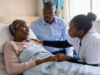
Perpetue Umurerwa (not her real name), a genocide survivor who was raped during the genocide, recalls her transformation.
“I was in darkness. I used to live in deep isolation and grief. I saw everyone as my enemy. No neighbor ever visited me, and I never visited anyone. I spent days and nights crying, without any hope for the future. Poverty had consumed me.”
Her life changed after joining SEVOTA. “Everything changed. I began interacting with others. I was happy. People visited me, and I visited them. My life improved because we formed self-help groups that focus on economic empowerment,” she says.
Similarly, Dancille Uwamariya from Bugesera (not her real name) describes SEVOTA’s founder as a “mother figure.” Having become pregnant as a result of rape during the genocide, she struggled deeply.
“My son would ask me the name of his father, which disturbed and hurt me. But when I met other women with the same background, I started learning weaving through SEVOTA’s project. That skill allowed me to start earning money, and now I am a woman who can afford what I want.”
She adds “Through SEVOTA, we learned how to weave house carpets. The organization provided us with tools and helped us find markets. One carpet costs about 15,000 Rwandan francs, and the income sustains our families. I even built the house you see here thanks to that work.”
Breaking the Silence on Sexual Violence
At a time when sexual violence was a taboo subject, Godelieve and her team dared to speak out. She helped organize the Taba Women’s Network for Peace in Kamonyi District a group of 600 women survivors who broke the silence and documented their experiences for national and international advocacy.
Their courage contributed to historic legal progress, including the 1996 Organic Law, which classified rape and sexual torture as first-category crimes punishable by life imprisonment. Their testimonies were also presented before the International Criminal Tribunal for Rwanda (ICTR), leading to the recognition of rape as both a crime against humanity and an act of genocide.
For the first time, women’s suffering was acknowledged not as collateral damage of war but as a central issue of justice and human rights.
From Trauma to Transformation

SEVOTA’s work extended beyond genocide survivors to include other women committed to rebuilding peace and contributing to national development and reconciliation.
“I wasn’t a genocide survivor, but I wanted to help those women who lived in pain because of the genocide’s consequences,” says Cecile Mukakirenga from Kamonyi District, Rukoma Sector.
She explains that being part of the same development groups with survivors helped bridge emotional and social gaps:
“At first, we feared approaching widows and orphans who had survived the genocide, but working together in development groups has helped us understand each other and build trust. Now, we all belong to the same self-reliance groups.”
Over the past 30 years, SEVOTA’s work has grown far beyond emergency recovery. The organization has empowered more than 3,000 households through 166 self-help groups, teaching women leadership, conflict resolution, and economic independence.
Through the Abiyubaka Forums (Women Who Rehabilitate Themselves), women who survived rape, forced marriage, and gender-based violence come together to learn, share, and rebuild their confidence. Supported by partners like Medica Mondiale, these forums have transformed victims into change agents women who now lead cooperatives, run businesses, and mentor others.

Marie Theodette Nyinawabasinga, a leader from one of the TWIYUBAKE groups supported by SEVOTA in Nyarusange Sector, Muhanga District, joined the organization in 2016. She recalls:
“The organization has transformed the lives of many women, helping them rebuild confidence, find healing, and live purposeful lives. They gave me support of 60,000 Rwandan francs, and I bought a pig that produced many offspring. SEVOTA also gave our group cows, which help members earn money from their products and save for the future. If a member needs a small loan, they can borrow from the group’s savings.”
In addition to empowering women, Godelieve has championed youth engagement. Over 3,000 children and young people have participated in Peace and Development Clubs, where they learn values of empathy, non-violence, and gender equality ensuring that the next generation continues the legacy of peacebuilding.
Building a Future of Peace and Equality
Dr. Godelieve’s advocacy extends beyond grassroots action. As a member of PRO-FEMMES Twese Hamwe, she joined national campaigns for gender equality and contributed to Rwanda’s ratification of international instruments like the Maputo Protocol. Her leadership helped position Rwanda among the world’s top countries for women’s representation in decision-making.
Her dream now is to build a permanent symbol of this work an Institute of Peace in Kamonyi District, on a 25hectare site dedicated to healing, education, and empowerment. The planned center will include training facilities, a library, a women’s museum, a peace garden, and programs for agribusiness, youth arts, and healthcare.
It is her vision of a Rwanda where men and women, survivors and their children, live together in dignity and mutual respect.
A Life of Recognition and Humility
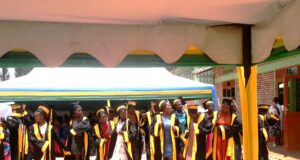
Dr. Godelieve’s relentless commitment has earned her numerous national and international honors. Among them are the John Humphrey Freedom Award (2004), the International Women of Courage Award (2018) from the U.S. Department of State, and the Global Innovator Award (2018) from Texas Christian University which also granted her an Honorary Doctorate for her role in rebuilding Rwanda’s social fabric.

In 2022, she was named among the Righteous in the Garden of Milan, Italy, for her commitment to reconciliation and humanity. Yet, despite such accolades, she remains humble often saying that her greatest reward is seeing women and their children smile again after years of despair.
“We needed to relearn how to live,” she says. “But that was only possible if we stood together.”
“I started SEVOTA as an organization to help them,” she explains. “It became both a hub of security and a basket of peace a place where women could share their grief and emerge with renewed hope. There, they discovered solidarity, unity, and initiatives that helped survivors regain a vision for their lives.”
“I am now happy because the work we did has produced positive results. Now I want to work with youth so they remain positive and continue to protect the peace we have. We have done much for these women who are now mature, but the next generation must also learn how to build their lives and live peacefully.”She adds
The Legacy of a Woman of Courage
Today, as Rwanda continues its journey of unity and progress, Dr. Godelieve stands as a living reminder that healing is possible not through forgetting, but through compassion, justice, and shared purpose.

Her story is not only about the past but also about the future a call to young women to believe in their potential, to take leadership, and to serve with empathy. Through her work, she has proven that peace is built not only in government offices or courtrooms but also in homes, cooperatives, and the hearts of women who refuse to give up.
“We are no longer victims,” she once said. “We are builders of peace.” And in every woman she has inspired, and in every child who now dreams without fear, the legacy of Dr. Godelieve Mukasarasi lives on a legacy of resilience, love, and unwavering faith in humanity.
Click the Video below to listen to testimonies related to this story:
Note that some photos in this story were AI-generated and certain names changed to protect sources’ identities, given the sensitivity of their testimonies; all information remains factual and ethically verified