by Doreen Karungi
The African Continental Free Trade Area (AfCFTA) is one of the flagship projects under the African Union’s Agenda 2063, designed to create a single, unified African market for goods and services, making trade across the continent easier and more inclusive.
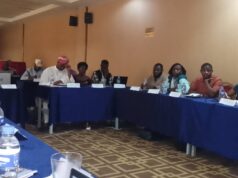
During an online training session titled “AfCFTA Export Readiness Training for SMEs (Trade in Goods)” held in Kigali on Friday, 17 April 2026, Adeodata Marie Ange, Founder and Managing Director of COINS PA a business consulting firm for SMEs in Africa and one of the AfCFTA ambassadors in Rwanda said the training aims to equip Rwandan youth and small business owners with practical knowledge to expand from local operations into the wider African market.
The training focused on strengthening participants’ understanding of AfCFTA, including export preparation, cross-border trade procedures, and how to engage in regional trade legally and competitively. Ange highlighted that the initiative is unique compared to others because it provides mechanisms for addressing business challenges.
“The interest in this training is that it is different from other organizations. If you encounter a problem, there is a clear way to report it and have it resolved,” she explained.
“Our goal is to help bridge the gap between these trade frameworks and what they actually mean for you as entrepreneurs, professionals, or individuals interested in doing business across Africa,” Ange added.
She emphasized that to fully benefit from AfCFTA opportunities, entrepreneurs must understand trade laws, market requirements, and how business operations function within regional and continental frameworks.
Understanding AfCFTA’s economic potential
According to presentations delivered by Amos Akandwanaho, a member of the AfCFTA National Implementation Committee who also works with the Ministry of Trade and Industry, AfCFTA is considered a major economic driver for the continent. The agreement brings together a market of over 1.3 billion consumers with a combined Gross Domestic Product (GDP) estimated at approximately USD 3.4 trillion.

Image generated by AI.
“AfCFTA is not just a policy framework it is a practical tool that young entrepreneurs can use to access new markets, scale their businesses, and compete beyond national borders,” Amos said during the session.
He explained that the AfCFTA Agreement is implemented through key protocols on Trade in Goods and Services, Investment, Intellectual Property Rights, Competition Policy, and Dispute Settlement. The agreement and its initial protocols entered into force on 30 May 2019, with additional protocols including Digital Trade and Women and Youth in Trade also approved.
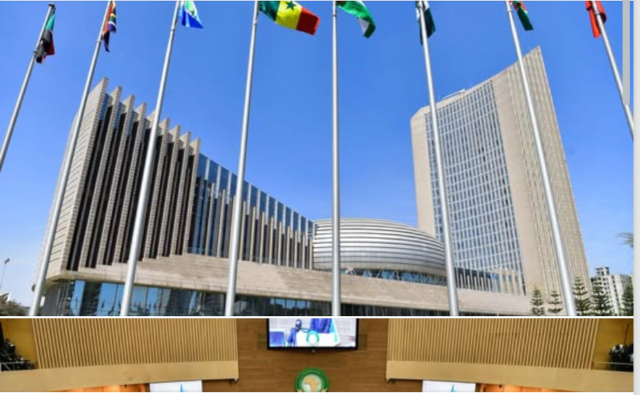
AfCFTA works alongside Africa’s Regional Economic Communities such as the East African Community (EAC), Common Market for Eastern and Southern Africa (COMESA), Economic Community of West African States (ECOWAS), and Southern African Development Community (SADC). The framework is overseen by AU Heads of State and supported by the Council of Ministers and the AfCFTA Secretariat based in Accra.
Challenges and opportunities for SMEs and youth
Amos noted that despite these opportunities, many young entrepreneurs and SMEs still struggle to take full advantage of the agreement.
“We continue to see gaps in understanding export requirements, limited awareness of cross-border trade regulations, and insufficient information about market opportunities across Africa. These barriers prevent many SMEs from fully participating in intra-African trade,” he said.
He pointed out key challenges including limited understanding of export requirements, lack of awareness of trade laws and taxes related to cross-border trade, insufficient knowledge of market opportunities, and limited guidance on formal procedures for entering regional markets.
Amos further emphasized that AfCFTA could bring significant benefits, including increased intra-African trade, job creation for young people, reduced tariffs and non-tariff barriers, and increased investment in manufacturing and value addition.
The training was conducted under the CADAST Program (Capacity Development for Africa’s Structural Transformation), which aims to strengthen Africa’s capacity for economic transformation and sustainable development.
Presentations during the session also highlighted that in Eastern Africa, AfCFTA could generate welfare gains estimated at USD 1.8 billion, alongside the creation of more than two million new jobs.
Participants were encouraged to begin preparing early by improving their knowledge, researching regional markets, and understanding export readiness requirements.
The training concluded with a strong message that AfCFTA is not merely a political agenda, but a real economic opportunity for Rwandan youth and entrepreneurs seeking to grow beyond national borders.
While the agreement offers a gateway to Africa-wide business expansion, speakers stressed that unlocking these opportunities will require continued training, access to information, and practical guidance to translate policy into real business action.
A total of 54 African countries have signed the AfCFTA Agreement, while 49 countries have officially ratified it, becoming State Parties, meaning the agreement is legally operational for them.

Image generated by AI.