By Bugirimfura Rachid
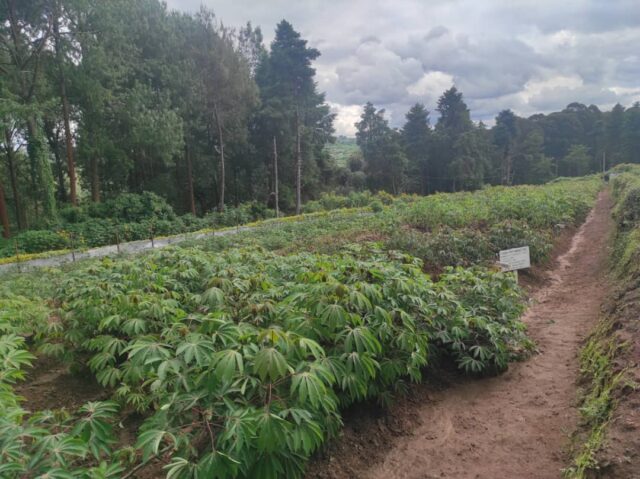
This September, Rwanda is set to introduce a newly developed cassava variety resistant to the destructive cassava brown streak disease (CBSD), locally known as Kabore, marking a pivotal moment for the country’s staple crop and food security.
The Rwanda Agriculture and Animal Resources Development Board (RAB) confirmed that this genetically improved variety is now in the fifth stage of a meticulous seven-step regulatory approval process. On-farm trials have demonstrated promising results, prompting RAB to prepare a formal submission to the Rwanda Environment Management Authority (REMA) for formal launch. “We are preparing to request formal approval from REMA, and depending on how farmers receive it, we may add this variety to Rwanda’s official seed catalogue,” explained Dr. Athanase Nduwumuremyi, lead researcher overseeing the project.
Cassava stands as Rwanda’s second most important staple crop, with recent harvests yielding approximately 542,874 tonnes in the latest Season A—up 5 percent from the previous year. National production was around 1.1 million tonnes in 2019, highlighting the crop’s vital role in national food systems.
Yet, Rwanda government’s optimism contrasts starkly with the looming threat of CBSD. When present, the disease can slash yield by as much as 70 percent, destroying the crop’s economic and nutritional value. Across East Africa, the twin threats of cassava brown streak and mosaic diseases cost farmers an estimated US $1 billion annually, while moderate infections alone can reduce tuber market value by 90 percent, relegating prices from US $55 to under US $5 per tonne.
Regional studies further highlight the severity. In Malawi, researchers recorded a national field-level CBSD incidence of 75 percent, with root necrosis causing losses of US $42.7 million in 2018 alone. Across East Africa—including Kenya, Tanzania, Uganda, and Malawi—combined annual losses from the disease reach approximately US $750 million.
These figures dwarf Rwanda’s own agricultural output, underlining the urgency behind the new resistant variety. Designed to be compatible with local ecosystems, the variety builds on Rwandan cassava strains while incorporating strong disease-resistance traits. “It will not disrupt farming practices. Its resistance is crucial for boosting yields and reducing chemical costs,” Dr. Nduwumuremyi reassured.
The research breakthrough was made possible thanks to Rwanda’s 2024 biosafety law, which set up a regulatory framework to manage genetically modified organisms (GMOs). This move brought Rwanda into the fold with 11 other African nations—including South Africa, Kenya, and Nigeria—that have similar legislation in place.
The choice to harness biotechnology comes amidst global evidence of its potential benefits. Worldwide, genetically enhenced crops have improved yields, empowered farmers, and delivered environmental and economic gains. A 2014 global meta-analysis found GMO adoption reduced pesticide use by 37 percent, increased yields by 22 percent, and lifted farmer profits by 68 percent.
While these global figures are rooted in staple crops like maize and soybean, Rwanda’s domestic initiative aligns seamlessly with this broader success story. Disease-resistant cassava could mark a turning point for Rwandan agriculture—preserving harvests, strengthening food security, and reducing the financial strain of crop losses and chemical dependence.
Looking ahead, RAB is also advancing research on crops facing similar threats. Potato varieties resistant to late blight are in the pipeline, and maize breeding initiatives aim to enhance tolerance to drought and pests like the fall armyworm. These innovations promise to reduce reliance on weekly fungicide application and increase farmer incomes.
Despite the scientific promise, challenges remain. The success of the new cassava variety hinges on effective dissemination of clean planting materials, farmer education, and securing reliable markets to ensure that increased yields lead to improved livelihoods.
If approved, the disease-resistant cassava is expected to reach farmers by year’s end. For Rwanda’s rural communities, already grappling with climate pressures and economic vulnerabilities, this could be a turning point—turning fields once plagued by Kabore into symbols of resilience and hope.